
What You Will Learn That Other Articles Skip
This guide covers the circadian rhythm science behind night-time itch (your cortisol naturally dips at night, raising itch), why bedbugs and dust mites are often missed culprits, the role of liver, kidney, and thyroid disease in chronic itching, and a 5-step bedroom checklist that solves most cases in a week. About 40% of adults report nocturnal pruritus at some point in their lives.
What Is Night-Time Itching?
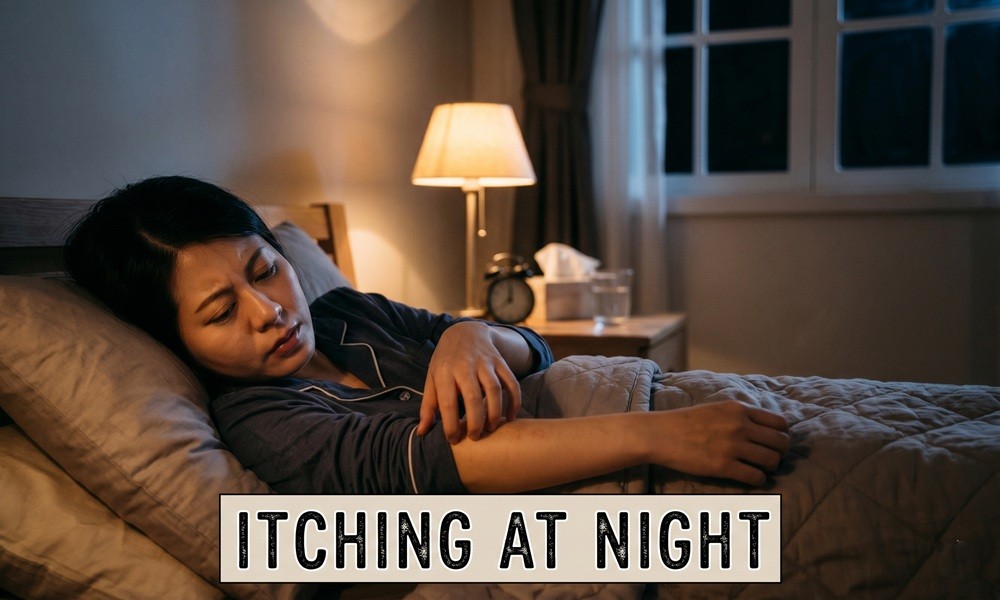
The medical term is nocturnal pruritus. It is the urge to itch and scratch, mostly between bedtime and morning. It can be mild or severe enough to keep you awake.
Doctors say roughly 1 in 4 adults in the US will deal with chronic itching at some point. Night-time itching is also common in older adults, pregnant women, and people with skin conditions.
Where It Usually Shows Up
- Arms and legs
- Torso
- Back
- Scalp
- Lower legs and feet
- All over the body (often a deeper cause)
Why Skin Itches More at Night: The Science
Your body works on a 24-hour cycle called the circadian rhythm. Several things change at night that make itch worse:
- Body temperature rises before sleep, which can trigger itch
- Cortisol drops – this anti-inflammatory hormone is lowest at night
- Water loss through skin increases – leaves skin drier
- Fewer daytime distractions – you notice itch more
- Prostaglandin levels rise – these are chemicals tied to itching
This is why your skin can feel fine during the day and unbearable at 11 PM.
10 Most Common Causes of Night-Time Itching
1. Dry Skin (Xerosis)
The number one cause. Skin loses moisture faster at night. Heaters and air conditioning make it worse.
Signs: Flaky, tight, rough skin without a rash.
Fix: Moisturise within 3 minutes of a shower. Use a thick, fragrance-free cream.
2. Eczema (Atopic Dermatitis)
Eczema flares often peak at night. The skin barrier is weak, water escapes faster, and inflammation rises.
Fix: Use ceramide-based moisturisers and prescription creams as advised.
3. Bedbugs
Bedbugs bite at night while you sleep. Look for small, red, itchy bumps in lines or clusters on arms, neck, and back.
Fix: Check mattress seams and headboard for tiny black spots. Hire pest control if found.
4. Dust Mites and Bed Allergens
Pillows and mattresses collect dust mites, dead skin, and dander. These cause allergic itching at night.
Fix: Wash bedding weekly in hot water. Use allergen-proof covers.
5. Scabies
Tiny mites burrow into skin and lay eggs. Itching is intense at night and worse around wrists, fingers, waist, and groin.
Fix: Needs prescription cream (permethrin or ivermectin).
6. Liver Disease
Bile salts build up in the blood and cause whole-body itching, often worse at night. No rash, just intense itch.
Other signs: Yellow skin or eyes, dark urine, fatigue.
7. Kidney Disease
Chronic kidney problems can cause severe itching, especially in people on dialysis.
8. Thyroid Issues
Both overactive and underactive thyroid can dry the skin and cause itching.
9. Diabetes
High blood sugar damages tiny blood vessels and nerves. Skin gets dry. Yeast infections are also more common.
10. Iron-Deficiency Anemia
Iron-deficiency anaemia, certain cancers (lymphoma), and some neurological conditions can also cause unexplained itching. Always investigate persistent night-time itch.
Other Triggers to Check
| Trigger | What It Looks Like |
| Laundry detergent | Itch after new washing routine |
| Wool, polyester sheets | Itch worse on certain bedding |
| Hot showers before bed | Strips skin oils |
| Alcohol at night | Dilates blood vessels, raises itch |
| Spicy dinner | Raises body heat |
| Hormonal changes | Pregnancy, menopause |
| Stress | Activates itch nerves |
| Antihistamine withdrawal | Rebound itch |
Fast Relief: What to Do Right Now
1. Cool Compress
Press a cold, damp cloth on the itchy spot for 5-10 minutes.
2. Colloidal Oatmeal Bath
Add finely ground oats to warm (not hot) water. Soak for 15 minutes. Calms inflamed skin.
3. Coconut Oil
Apply virgin coconut oil. Research in the Journal of Traditional and Complementary Medicine shows it boosts skin barrier proteins (filaggrin) and helps eczema.
4. Aloe Vera Gel
Cools and reduces irritation. Keep a tube in the fridge.
5. Anti-Itch Cream
Hydrocortisone 1% or calamine lotion. Use short-term.
6. Antihistamine
Older types like diphenhydramine (Benadryl) cause drowsiness and may help you sleep. Hydroxyzine is another option. Ask a doctor.
5-Step Bedroom Checklist
A single bedroom can hold dozens of itch triggers. Run this list once:
- Wash sheets and pillowcases weekly in hot water.
- Use allergen-proof covers on mattress and pillows.
- Vacuum the mattress every 2 weeks.
- Set room temperature at 18-20°C. Cooler = less itch.
- Use a humidifier in dry weather.
Best Routine to Prevent Night Itching
| Time | Action |
| Evening shower | Lukewarm water, gentle cleanser |
| Right after shower | Apply thick moisturiser |
| Before bed | Wear cotton clothes |
| Bed setup | Clean cotton sheets, cool room |
| Snack | No spicy food or alcohol |
| Hydration | Drink water through the day |
When to See a Doctor
See a doctor if you have:
- Itching for more than 2 weeks
- Whole-body itching with no rash
- Itching with fever, weight loss, or fatigue
- Yellow skin or eyes
- A new mole or growth that itches
- Itching that stops sleep most nights
- Signs of skin infection (pus, warmth, fever)
Whole-body itching without a rash needs blood tests. Liver, kidney, thyroid, and blood-count panels are usually checked.
Doctor-Prescribed Treatments
- Topical steroids – for eczema and inflammation
- Calcineurin inhibitors – non-steroid creams (tacrolimus)
- Phototherapy – UV light for severe pruritus
- Gabapentin – for nerve-related itch
- Cholestyramine – for liver-related itch
- Targeted biologics – dupilumab and others for severe eczema
Foods That May Help
- Omega-3 foods – flax seeds, walnuts, fatty fish
- Vitamin D foods – eggs, mushrooms, fortified milk
- Hydrating foods – cucumber, watermelon
- Probiotic foods – yogurt, fermented foods
- Zinc-rich foods – pumpkin seeds, lentils
Avoid alcohol, very spicy food, and processed sugar if itch is severe.
Frequently Asked Questions
Why is my skin itchy at night but not in the day?
Body temperature rises, anti-inflammatory hormones drop, water loss through skin rises, and there are fewer distractions – so the itch feels stronger.
Can stress cause night itching?
Yes. Stress increases itch nerve signals and can trigger eczema flares.
Should I worry if my body itches without a rash?
A widespread itch with no rash for more than two weeks needs a doctor. It may signal liver, kidney, thyroid, or blood disorders.
What is the best moisturiser for night-time itch?
Thick, fragrance-free creams with ceramides, glycerin, or shea butter. Apply within 3 minutes of bathing.
Can bedbugs cause itching only at night?
Yes. They feed when you sleep. Check mattress seams for small black dots.
Does drinking water help with night-time itch?
Yes. Hydrated skin is less itchy. Aim for 6-8 glasses a day.
Is itchy skin at night a sign of diabetes?
It can be. High blood sugar dries the skin and damages nerves. Get a glucose test if itch is persistent.