
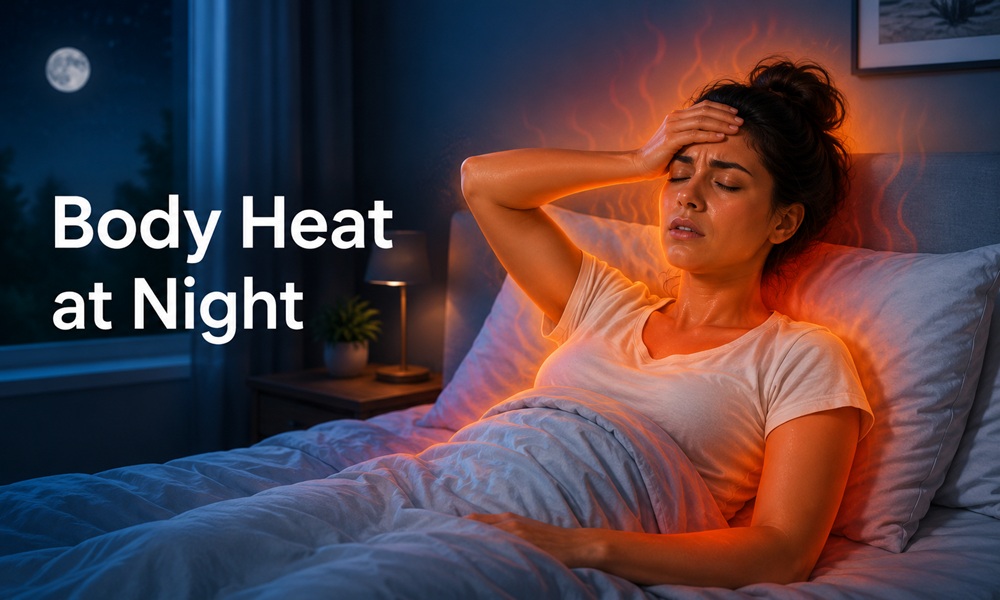
Your core body temperature is supposed to drop about 1°F (around 0.5°C) as you fall asleep. When that drop fails — or your body actively warms up at night — you wake up sweaty, restless, or unable to sleep.
Let us break down every reason this happens and exactly what to do.
Is Feeling Hot at Night Normal?
Mild warmth at night is normal. Excessive heat, drenching sweats, or repeated awakenings are not. The difference matters because chronic overheating affects deep sleep, hormones, and next-day energy.
11 Common Causes of Body Heat at Night
1. Your Bedroom Is Too Warm
Sleep experts recommend keeping the bedroom between 15–19°C (60–67°F). Anything above 22°C disrupts the natural body-cooling process.
2. Heat-Trapping Mattress or Bedding
Memory foam, polyester sheets, and synthetic blankets trap heat. Cotton, linen, and bamboo breathe far better.
3. Eating Heavy, Spicy, or Late Meals
Digestion is a heat-producing activity. Spicy food, carbs, and large dinners eaten within 2 hours of bed all raise core temperature.
4. Alcohol or Caffeine Before Bed
Alcohol initially feels cooling but causes rebound heat, sweating, and disrupted sleep. Caffeine elevates metabolic rate for hours.
5. Hormonal Changes
Perimenopause, menopause, PMS, pregnancy, and thyroid imbalances all alter how your body regulates temperature. Hot flashes are the most well-known example.
6. Stress and Anxiety
Cortisol and adrenaline raise heart rate and core temperature. Going to bed stressed almost guarantees overheating.
7. Hyperthyroidism (Overactive Thyroid)
An overactive thyroid speeds up metabolism, increases heart rate, and produces constant warmth — including at night.
8. Medications
Certain antidepressants, hormone therapies, fever reducers, diabetes medications, and steroids can trigger night sweats.
9. Infections and Fever
Even low-grade infections, TB, and some viral illnesses cause classic night sweats. If they last more than a week, see a doctor.
10. Sleep Apnea
Repeated breathing interruptions cause stress responses and sweating. Loud snoring + hot nights = get tested.
11. Intense Late Workouts
Exercise within 2–3 hours of bed keeps your core temperature elevated. Schedule workouts earlier when possible.
Quick Comparison: Causes vs. Severity
| Cause | Likely Severity | When to Act |
| Warm bedroom or heavy bedding | Mild | Adjust immediately |
| Late spicy dinner | Mild | Lifestyle fix |
| Menopause / hormones | Moderate | Consult gynaecologist |
| Stress / anxiety | Moderate | Mindfulness, therapy |
| Hyperthyroidism | Significant | Blood test (TSH, T3, T4) |
| Sleep apnea | Significant | Sleep study |
| Drenching sweats + weight loss | Serious | See doctor urgently |
How to Stop Body Heat at Night: 15 Proven Fixes
- Set bedroom temperature to 18–20°C.
- Use 100% cotton or linen sheets (avoid polyester satin).
- Take a warm shower 90 minutes before bed — it triggers a cooling effect.
- Sleep with feet uncovered (feet release lots of heat).
- Avoid spicy food, alcohol, and big meals after 7 PM.
- Keep a glass of room-temp water nearby — sip if you wake hot.
- Use a fan even if AC is on (air circulation matters).
- Switch to a cooling gel pillow or breathable mattress topper.
- Practice 4-7-8 breathing before bed to lower cortisol.
- Lose extra weight if applicable — more body fat = more retained heat.
- Sleep alone occasionally if your partner radiates a lot of heat.
- Wear loose, breathable cotton nightwear.
- Drink water during the day, not just at night.
- Limit late workouts.
- Check thyroid, ferritin, and hormones if all else fails.
Body Heat at Night in Women vs. Men
Women report nighttime overheating far more often, mainly due to estrogen fluctuations during menstruation, perimenopause, and menopause. Men typically run warmer at baseline but report fewer disruptive hot flashes. Both genders can develop sleep apnea or thyroid issues.
Body Heat at Night in Summer vs. Winter
Summer Strategy
- Run an AC at 22°C with a fan.
- Use lightweight linen sheets.
- Keep curtains drawn during the day to keep the room cool.
- Avoid heavy dinners and spicy food.
Winter Strategy
- Many people overheat in winter because they overdress for bed.
- Use layered bedding so you can adjust mid-night.
- Lower the heater at night — 17–18°C is ideal.
When Body Heat at Night Becomes Serious
See a doctor if you have drenching night sweats that soak through clothes, fevers along with the night heat, unexplained weight loss, persistent fatigue alongside it, or symptoms lasting more than 2–3 weeks.
FAQs
Why does my body get hot at night but I don’t sweat?
Your blood vessels may be dilating to release heat, but sweat glands may not have activated yet. Hyperthyroidism and hormonal shifts often present this way.
Can low iron cause night sweats?
Yes — severe iron deficiency can cause restless legs, poor sleep, and night sweats indirectly.
Is it bad to sleep with a fan blowing on you?
For most healthy adults, no. It improves comfort and air circulation.
Body heat at night is usually fixable. Cool the room, lighten your dinner, manage stress, and rule out hormonal or thyroid issues — and you will sleep deeper than you have in years.